What We Keep
The legacy of Cowboy Joe
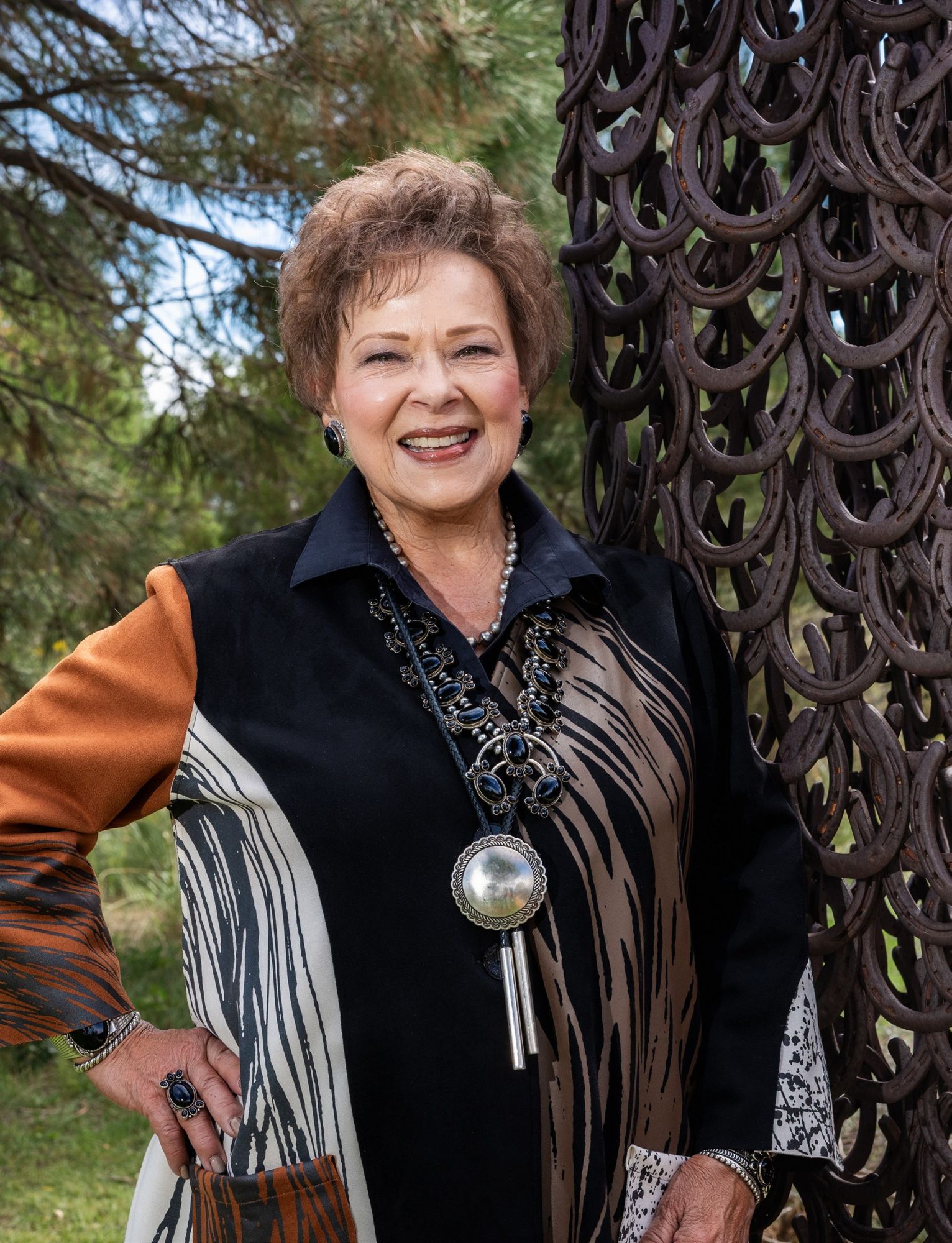
Teema McIntosh
When you meet Teema McIntosh, you don’t meet just one person. You meet Princess Blue Water, the Oglala Lakota woman who for more than 40 years brought generations of Native performers to Cheyenne Frontier Days. You meet Sally Rand, famed fan dancer who inspired the rodeo’s white buckskin tradition. You also meet generations of cattlemen and state politicians, railroad engineers whose pocket watches kept Cheyenne’s trains moving with remarkable precision. Time spent with Teema is time with the stories that make up Wyoming’s lore.
Having personal ties to some of our state’s most significant events, Teema is a living archive of Wyoming history. And luckily for us, she’s an incredible storyteller.
Inside the Carriage Hall of the Cheyenne Frontier Days Museum, she’s surrounded by ornate horse-drawn carriers—stagecoaches, wagons, an old ambulance. The hall has the feeling of a worn book with a cracked spine. It’s expansive, brimming, and somehow intimate. Everything in the room feels more kept than displayed.
“You know, this is where we danced,” says Teema. “I loved it when it was a pavilion. This here, this is the dance floor.”
The way she says, this is the dance floor, in present tense, stays in the air a little longer. She has a way of waking up the quietest parts of an old world.
Teema’s Wyoming roots stretch back five generations to 1884, when her great-great-grandfather ventured west from New York State. He left his 16-year-old son—Teema’s great-uncle—in Wyoming to settle Pole Creek Ranch near Cheyenne, where Teema herself would later be raised. The family’s story would eventually extend to the Farthing Ranch near Iron Mountain.
Ranching became a multigenerational Farthing legacy, with cattle at its center, but the family also became renowned for its Shetland ponies. The herd began with two mares and a stud given to Teema’s great-grandfather as a childhood gift. In 1903, he brought the three ponies with him to Wyoming, where they became the foundation of a herd that would eventually number roughly a thousand. When the price of cattle collapsed, Shetlands were the reason the family survived the Depression. Despite the economic crisis, there was still a market for the small horses. Each pony sold for a thousand dollars or more, helping keep the ranch out of foreclosure.
Little did anyone know the Farthing Shetlands would become an unexpected Wyoming icon.
With horses, it’s a trust thing. They have to trust you. It’s a big deal to be a Cowboy Joe Handler.
Teema McIntosh
During the winter of 1950, an orphaned pony stood in the hills beside his dead mother who had succumbed during an unforgiving blizzard. He would not leave her side. When the Farthing family found him stranded and alone, they did not expect him to live another night. But he did.
They named him Cowboy Joe.
“My great-grandparents Charles and Maude Farthing gave the first Cowboy Joe to UW about 76 years ago,” says Teema. “Prior to that, the mascots for the University of Wyoming were dogs, various kinds of dogs.”
Cowboy Joe was the start of a new era for UW. The small-but-tough Shetland was a natural representation of the university and our western identity. Thus began the long-standing partnership between the Farthing family and UW.
“Since Cowboy Joe I, my great-uncle and my cousins have continued to give the ponies,” says Teema.
Today, every pony mascot in UW history has come from the Farthings.
They aren’t born mascots. The ponies spend much of their first year roaming snowy hills with little human contact. They are left to find their own food and water until the annual round-up, when the family gathers them out of the hills. Those chosen to become the next Cowboy Joe are then broken.
“To be Cowboy Joe, that takes a lot of taming,” explains Teema. “They haven’t seen people. It takes my cousins several months to gentle them down. First with the halter, and then noises, balloons, whistles, bells, and sudden movements, all that. Feeding them, petting them, handling them. Eventually, being around people is what changes them.”
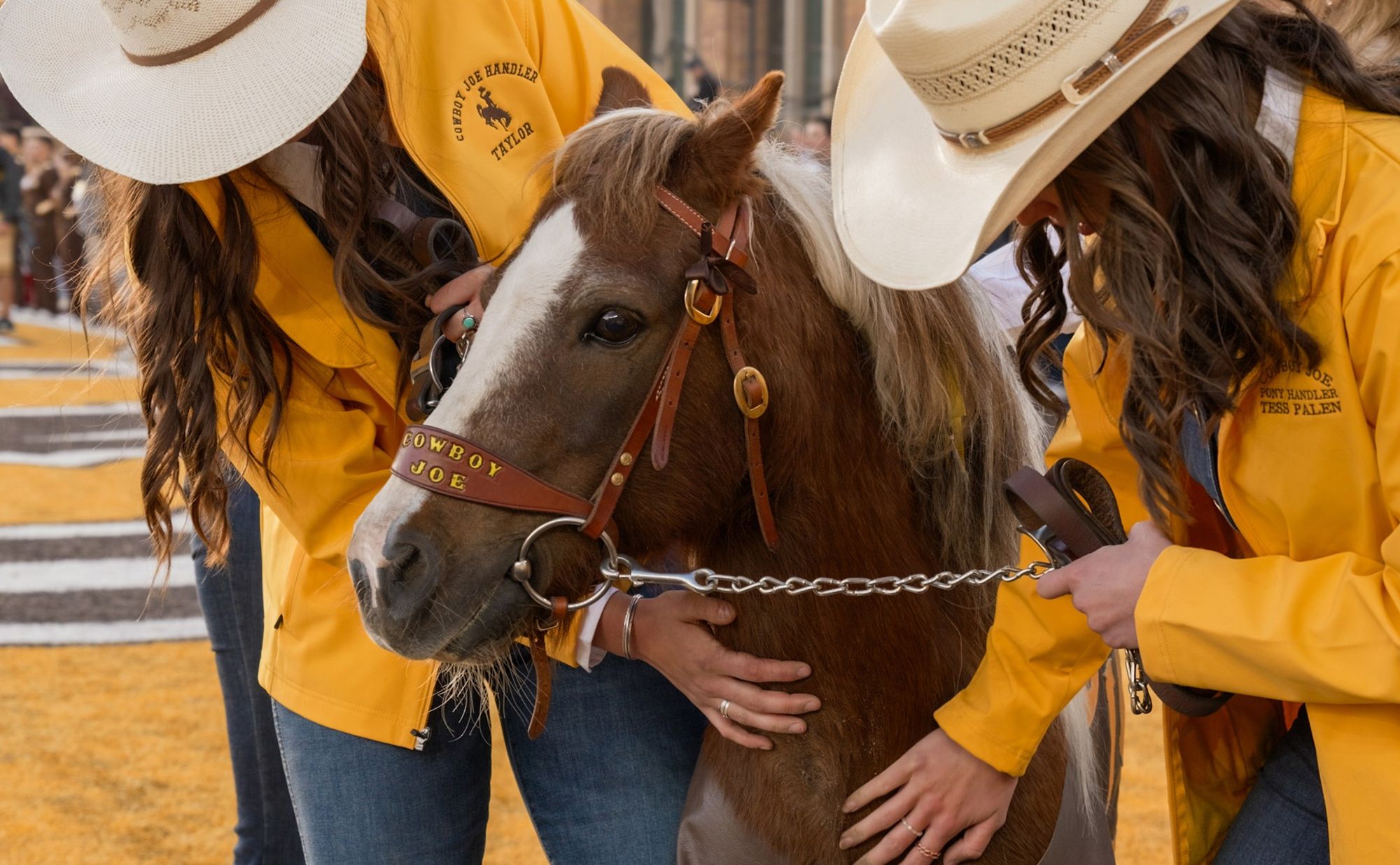
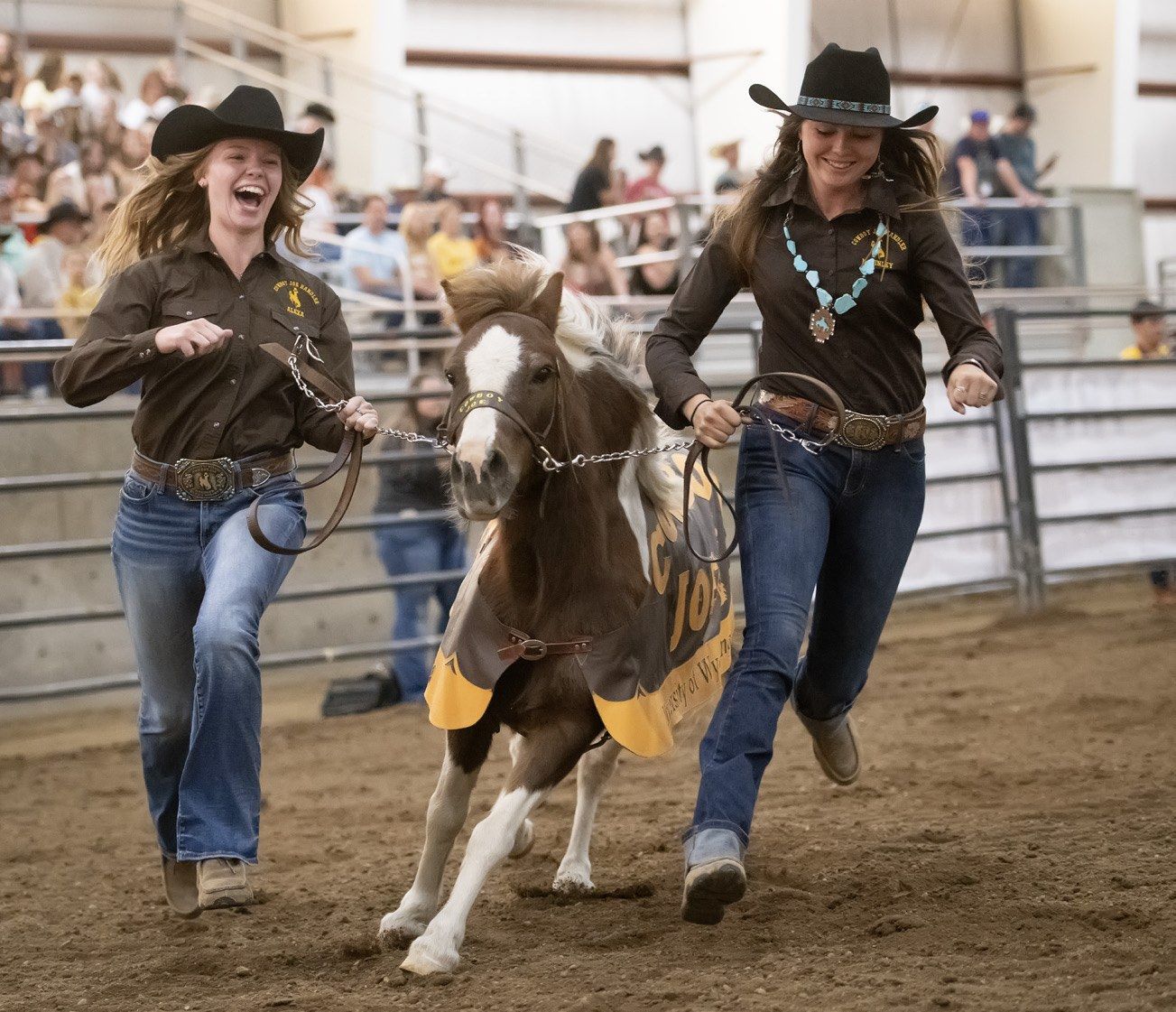
Once a pony is ready, much of his care is entrusted to a team of UW student handlers. They groom him, work with him regularly, and transport him to football games and appearances throughout the state. At events, the Cowboy Joe Handlers serve as the pony’s caretakers.
“With horses, it’s a trust thing,” says Teema. “They have to trust you. It’s a big deal to be a Cowboy Joe Handler. The ponies, when you see them, they’re pretty much a birthday party pony, right? It’s because the students are constantly handling him, building that trust.”
At the root of the Cowboy Joe tradition is loving something so thoroughly that it outlives any one generation. When Teema talks about the responsibility of it all, she speaks of it as an honor. To pass down what is cared for is to preserve the love that sustains it.
In 2025, Teema established the Teema J. McIntosh Excellence Fund Promoting and Preserving Cowboy Joe and Ag Equine-Related Tradition at UW. Through a multimillion-dollar estate gift, the endowment will help carry the tradition forward, caring for Cowboy Joe while supporting equine-related programs within the College of Agriculture, Life Sciences, and Natural Resources.
Teema looks around the Carriage Hall, faintly swaying as if she can hear music.
“They’re tough ponies,” she says. “They’re used to surviving. That’s what they’re bred for. I want this tradition to go on and for the university and all of Wyoming to know what it means for Cowboy Joe to be here—it’s important. Try to remember that. To be here is important.”
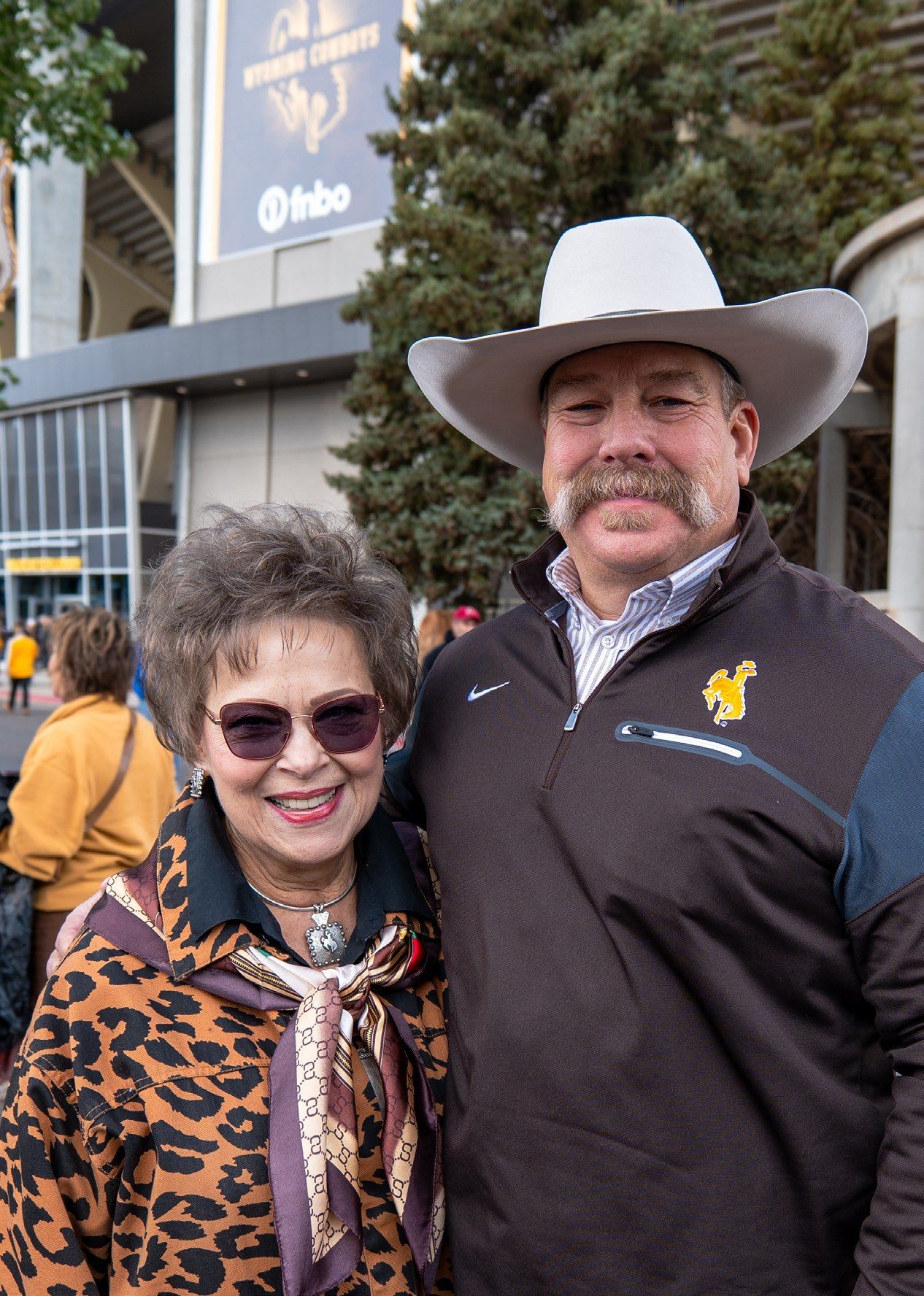


Teema and Kelly Crane, Farm Credit Services of America Dean, College of Agriculture, Life Sciences, and Natural Resources
